

Europe Battles Wildfires as France and Spain Face Growing Heatwave Crisis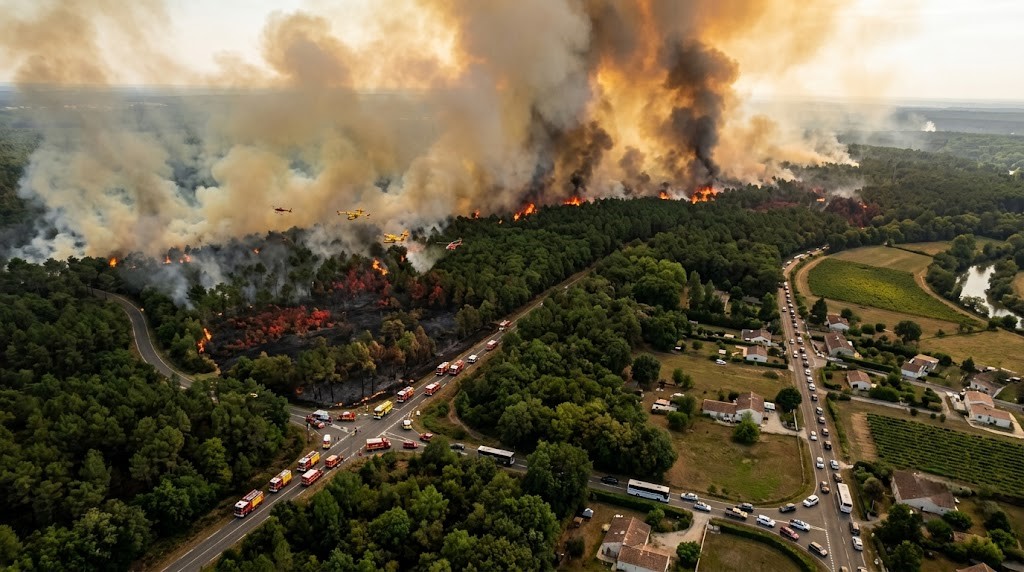 Europe is once again confronting the devastating effects of extreme weather as massive wildfires continue to spread across parts of France and Spain. Thousands of residents have been forced to evacuate their homes, while firefighters are engaged in relentless efforts to contain multiple blazes amid soaring temperatures and challenging weather conditions.
The situation has become particularly alarming near Bordeaux in southwestern France, where rapidly spreading fires have threatened communities and natural landscapes. Emergency responders are working around the clock to prevent the flames from reaching populated areas, while authorities continue to monitor changing wind patterns that could further complicate containment efforts.
Spain is facing similar challenges as intense heat and dry conditions have created an environment highly susceptible to wildfires. Several regions remain under weather alerts, prompting local governments to implement emergency measures and advise residents to remain vigilant. The combination of prolonged drought conditions, rising temperatures, and strong winds has significantly increased the risk of new fire outbreaks across affected areas.
Climate experts warn that Europe’s wildfire seasons are becoming longer and more destructive. Rising global temperatures are contributing to more frequent heatwaves and creating conditions that allow fires to spread more rapidly than in previous decades. Scientists emphasize that extreme weather events are no longer isolated incidents but are increasingly becoming recurring challenges that require long-term adaptation strategies.
The humanitarian impact of these disasters is substantial. Thousands of people have been evacuated from their homes, disrupting daily life and placing additional pressure on emergency services. Shelters have been established in several affected regions to provide temporary accommodation and essential supplies for displaced residents. Authorities continue to urge citizens to follow evacuation orders promptly and remain informed through official emergency announcements.
Beyond the immediate danger to human life, the environmental consequences are severe. Wildfires destroy ecosystems, threaten wildlife habitats, and contribute significantly to carbon emissions, creating a cycle that further exacerbates climate-related challenges. Forests that have taken decades to grow can be devastated within hours, leaving lasting scars on the environment and local economies that depend on tourism and agriculture.
International organizations have repeatedly highlighted the growing urgency of climate resilience and disaster preparedness. Investments in wildfire prevention technologies, early warning systems, and sustainable environmental policies are increasingly viewed as essential measures to address future climate-related emergencies.
As firefighters continue their courageous efforts across France and Spain, the unfolding crisis serves as a powerful reminder of the interconnected challenges posed by climate change. The images emerging from affected regions—towering flames, smoke-filled skies, and evacuated communities—underscore the importance of coordinated global action to mitigate the risks associated with extreme weather events.
Europe’s battle against these devastating wildfires is not merely a regional concern; it reflects a broader global reality. Communities worldwide are increasingly facing the consequences of a changing climate, making preparedness, environmental stewardship, and international cooperation more important than ever.


