

UK Flight Chaos: Thousands of Passengers Stranded After Air-Traffic Failure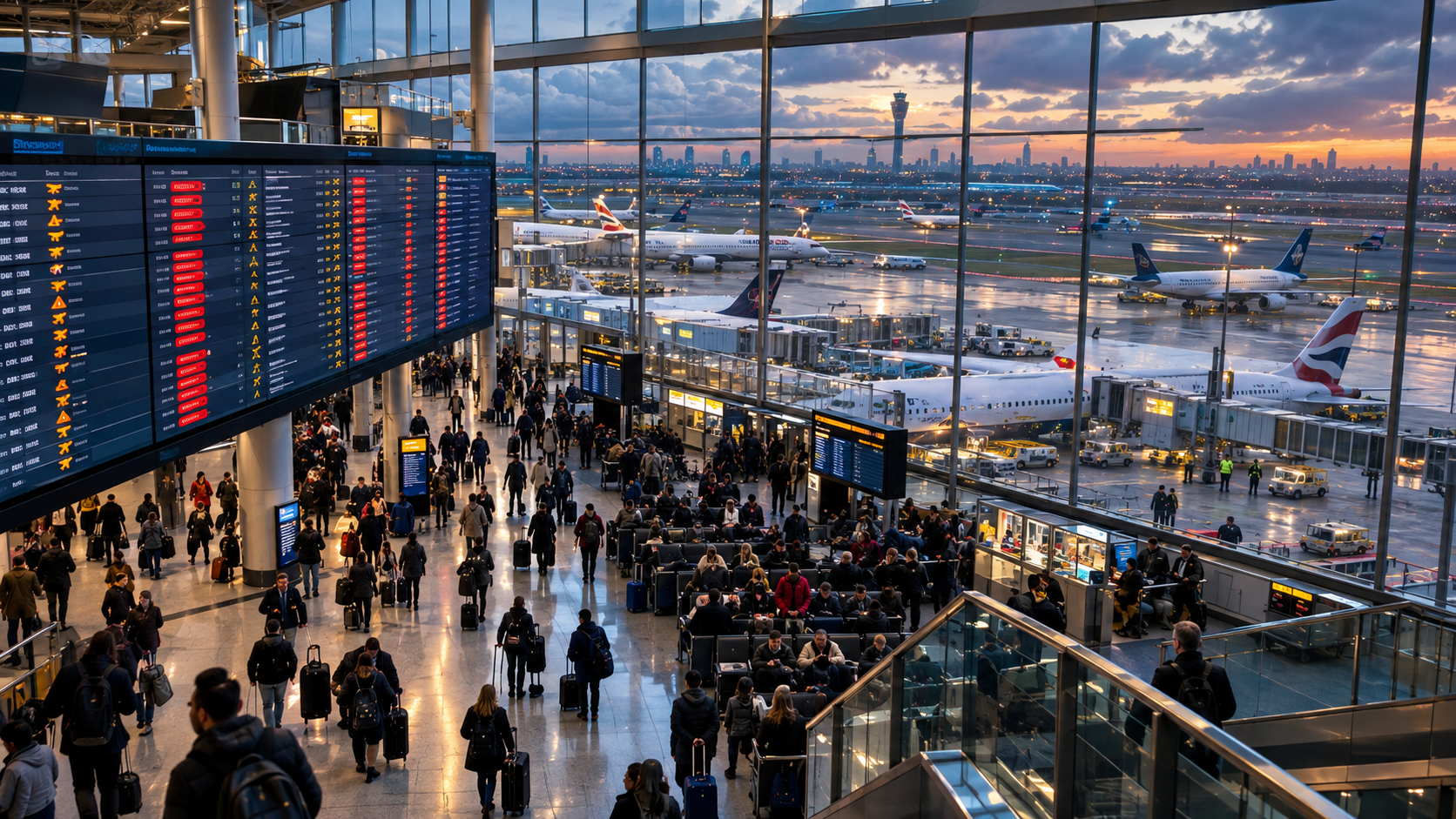 Britain’s aviation system is facing renewed scrutiny after a technical failure at the country’s air traffic control provider disrupted more than 2,000 flights and affected hundreds of thousands of passengers across major UK airports.
The disruption began on Tuesday after a technical problem hit the flight-data processing system operated by National Air Traffic Services (NATS). Airports including Heathrow, Gatwick, Manchester and Stansted were affected, creating widespread cancellations, delays and diversions across the aviation network.
Although NATS resolved the immediate technical problem, the consequences continued as airlines struggled to reposition aircraft and crews and clear the backlog of stranded passengers. Cirium data cited by ITV showed that around 2,145 flights were affected over the two days, with Heathrow among the airports hit hardest.
For passengers, the disruption created scenes of crowded terminals, long queues, cancelled departures and baggage problems. The effects also extended beyond the UK as aircraft and crews were left out of position, creating knock-on disruption across European aviation networks.
The incident has quickly developed into a political and corporate controversy.
NATS chief executive Martin Rolfe has faced mounting pressure after the latest failure, with airline executives questioning the resilience of Britain’s air traffic control infrastructure. The UK government has demanded answers, while the Civil Aviation Authority is conducting an independent review into the incident.
Ryanair chief executive Michael O’Leary has been particularly outspoken. On September 10, O’Leary accused NATS of giving inconsistent explanations about the cause of the outage and called for Rolfe to leave his position. NATS has not accepted those allegations, and the investigation into the precise cause remains ongoing.
Importantly, authorities have ruled out a cyberattack as the cause of the disruption. The government has instead described the incident as a technical failure requiring further investigation. Transport Secretary Heidi Alexander has said passengers should not have had to face the scale of disruption and has called for an independent assessment of the system’s reliability.
The incident is particularly significant because it follows previous failures involving Britain’s air traffic control infrastructure. Airlines and industry groups are now questioning whether the country’s systems have enough resilience and backup capacity to cope with major technical problems.
The financial consequences are also significant. Ryanair alone said its losses from the initial disruption were at least £3 million, while the wider impact has been spread across airlines, airports, hotels, passengers and businesses.
There is some good news for travelers. By Thursday, flight schedules were moving back toward normal, with cancellations slowing sharply. However, airlines and airports have warned that recovery from a major network disruption can take time even after the original technical problem has been fixed.
The UK flight crisis is therefore becoming more than a travel disruption story. It has turned into a wider debate about the reliability of critical national infrastructure, the cost of system failures and whether Britain’s aviation network is prepared for the demands of modern air travel.
For hundreds of thousands of passengers, however, the immediate concern remains much simpler: getting home, reaching their destination and knowing their next flight will actually leave.


