

South Sumatra Wildfires: Dangerous Haze Spreads Across Indonesia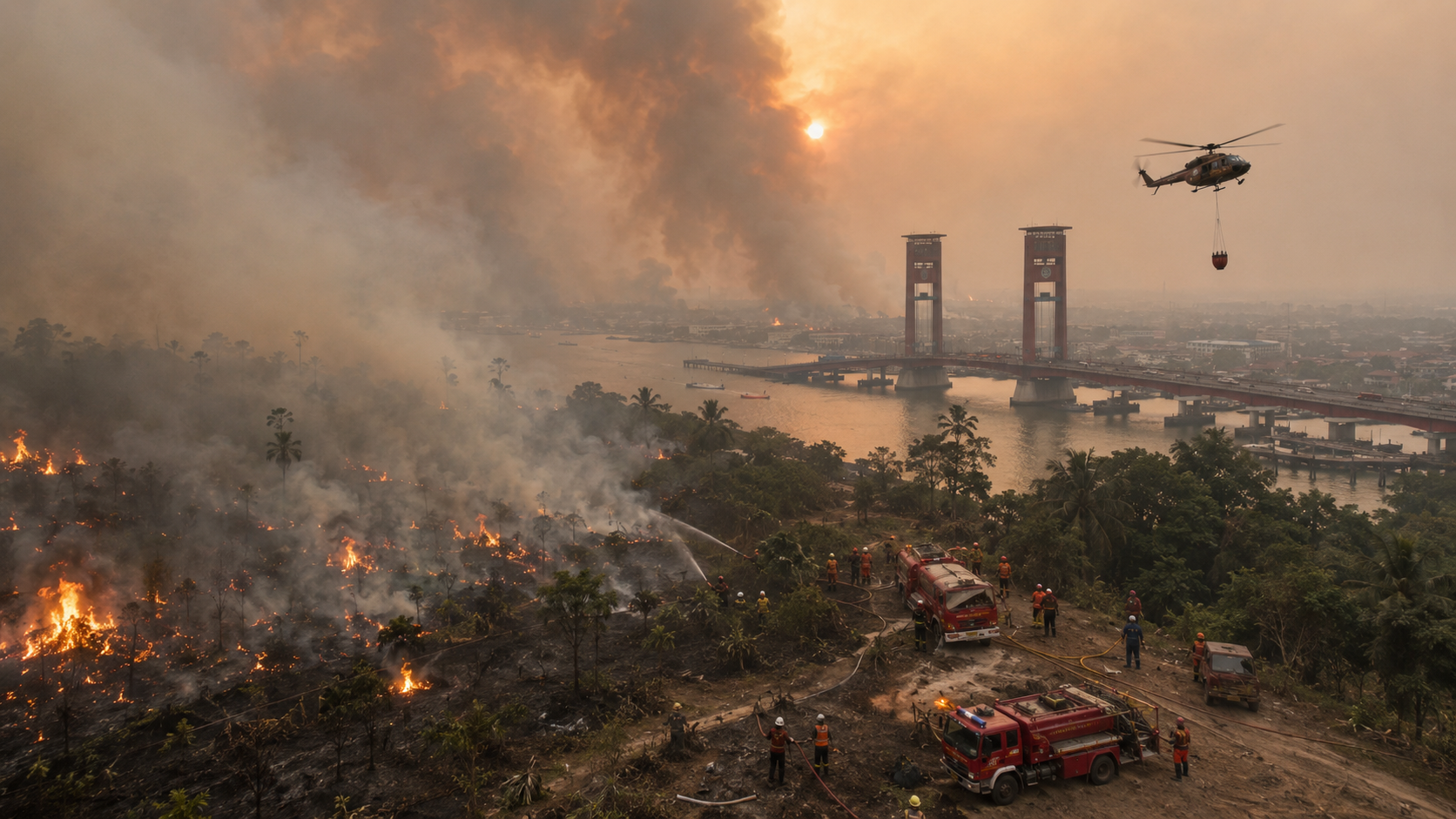 Indonesia is facing a major wildfire and air-pollution emergency as fires continue to burn across parts of Sumatra and Kalimantan, producing thick smoke that has blanketed cities and spread beyond Indonesia’s borders.
South Sumatra is among the areas reporting some of the highest concentrations of wildfire hotspots. In Palembang, the provincial capital, smoke has become so dense that visibility has fallen dramatically in some areas. Satellite observations have shown haze spreading across several Indonesian provinces, highlighting the scale of the crisis.
The emergency comes during a prolonged dry period accompanied by an intensifying El Niño pattern, creating conditions in which forests and particularly vulnerable peatlands can ignite and fires can become difficult to extinguish.
Haze Blankets Communities
The consequences are being felt far beyond the areas where flames are burning.
In parts of South Sumatra and other affected provinces, residents have faced thick smoke, reduced visibility and worsening air quality. Recent reporting from Indonesia says millions of people have been directly exposed to wildfire smoke, with health authorities recording increases in respiratory cases in several areas.
Palembang has become one of the most recognizable images of the crisis. The city’s famous Ampera Bridge has been photographed almost disappearing behind a dense layer of haze, illustrating how severely the smoke has affected visibility.
Indonesia Expands Firefighting Operations
Authorities have significantly increased their response.
More than 24,000 personnel have been involved in firefighting and emergency operations, while dozens of aircraft and helicopters are being used for water bombing, monitoring and weather-modification efforts.
The Indonesian government is also working with neighboring countries to address the cross-border effects of the smoke.
Malaysia has been authorized to conduct cloud-seeding operations inside Indonesian airspace in an effort to encourage rainfall and help reduce the severity of the haze.
Haze Crosses International Borders
The smoke is not remaining inside Indonesia.
Haze has moved across parts of Malaysia and Brunei, creating concerns about air quality, visibility and public health. In Malaysia, hundreds of schools have reportedly been closed in affected areas, disrupting education for thousands of students.
The cross-border pollution has transformed Indonesia’s wildfire emergency into a wider Southeast Asian environmental crisis, requiring cooperation between neighboring governments.
Authorities Investigate Fire Causes
While weather conditions have made the fires easier to spread, authorities are also investigating the human causes behind many of the blazes.
Indonesian police have arrested 72 people suspected of starting some of the recent forest and peatland fires. Authorities are also investigating companies in connection with suspected land-clearing practices.
Illegal or uncontrolled burning for land clearing has historically contributed to Indonesia’s recurring wildfire and haze problems. Peatlands are particularly difficult because fires can continue burning underground and re-emerge even after surface flames appear to be under control.
Communities Pray for Rain
The severity of the situation has even led thousands of residents in Palembang to gather for a special prayer for rain as firefighters continue battling the fires.
The unusual scene reflects the desperation of communities living through prolonged smoke and dry weather.
But emergency officials are relying on practical measures as well—including water bombing, ground firefighting, cloud seeding, surveillance and law enforcement.
A Growing Regional Crisis
Indonesia’s wildfire emergency is becoming a major environmental and public-health story across Southeast Asia.
With dry conditions continuing, authorities face the difficult task of containing fires while protecting communities from hazardous smoke.
The crisis also highlights the complicated relationship between climate conditions, land management and human activity.
For residents of South Sumatra and other affected regions, the immediate priority remains simple: clear the smoke, contain the fires and bring relief to communities waiting for cleaner air and much-needed rain.


