

Bangkok Flooding Affects 700,000 as Torrential Rains Disrupt Thailand’s Capital
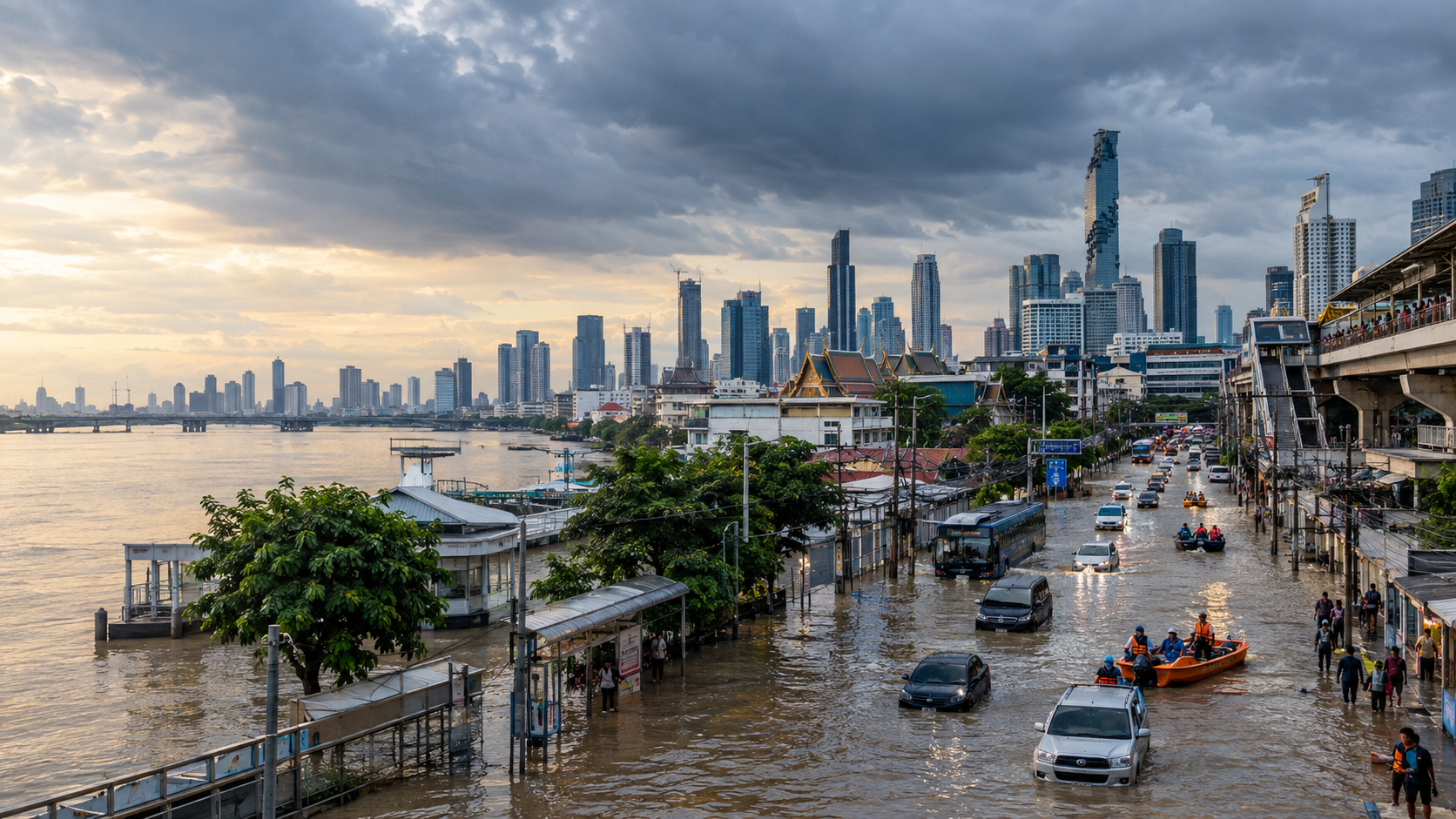 Bangkok is beginning to recover from severe flooding after days of intense rainfall inundated neighborhoods, roads and businesses across Thailand’s capital. Around 329,000 households, representing roughly 700,000 people, have been affected, according to Bangkok’s Flood Control Center. Although rainfall has begun to ease, several areas remain underwater and drainage operations are continuing.
The flooding followed nearly continuous heavy rain over the weekend, overwhelming parts of Bangkok’s drainage system. Several major canals reached levels too high to receive additional runoff, leaving water trapped across low-lying communities.
Eastern parts of the capital have experienced some of the most significant disruption. Roads and neighborhoods were inundated, with residents using boats or wading through floodwaters to reach homes, transportation hubs and shops. Some roads have begun reopening as water levels decline, but authorities continue to advise caution.
The Bangkok Metropolitan Administration has prioritized assistance for vulnerable residents, including elderly people, people with disabilities and bedridden patients. About 1,500 bedridden patients have been moved to hospitals, according to Thailand’s government, while thousands of residents have sought shelter in evacuation centers.
The disruption has extended beyond residential neighborhoods. Businesses have faced staffing shortages because employees have been unable to travel to work, while food supplies and other goods have been affected by disrupted transport networks. Panic buying was also reported as residents attempted to secure essential supplies.
Bangkok’s major international airport, Suvarnabhumi, has also experienced operational disruption. The Thai Air Force deployed personnel to help clear a backlog of passenger luggage after airport workers struggled to reach their workplaces.
The economic consequences could be significant. Reuters reported that flooding across Thailand has disrupted more than 580,000 homes since September 16 and estimated nationwide economic damage at at least 11 billion baht, or about $327 million. Retail and wholesale businesses in Bangkok and the eastern region are expected to face particularly significant effects if disruption continues.
The flooding also highlights Bangkok’s vulnerability to extreme rainfall. The city sits on low-lying, soft ground near the Chao Phraya River and experiences seasonal flooding. Heavy urban development places additional pressure on drainage infrastructure when unusually intense rainfall occurs.
For residents, however, the immediate issue remains much more personal: reaching homes, finding food, protecting property and keeping vulnerable family members safe.
As the weather improves, authorities are accelerating drainage operations and monitoring remaining flooded districts. Thailand’s meteorological authorities are nevertheless warning that heavy rain can continue in parts of the country, with risks including flash floods, overflowing waterways and landslides.
Bangkok’s floodwaters may be starting to recede, but the recovery will take longer. Roads, businesses, homes and essential services still face disruption, while authorities work to drain affected communities and provide assistance.
The Bangkok flooding is therefore not only a severe weather story—it is also a story about urban resilience, infrastructure, economic disruption and the ability of a major global city to respond when extreme rainfall overwhelms its systems.


