

Extreme Weather Intensifies Worldwide as Floods, Heatwaves, and Wildfire Risks Challenge Communities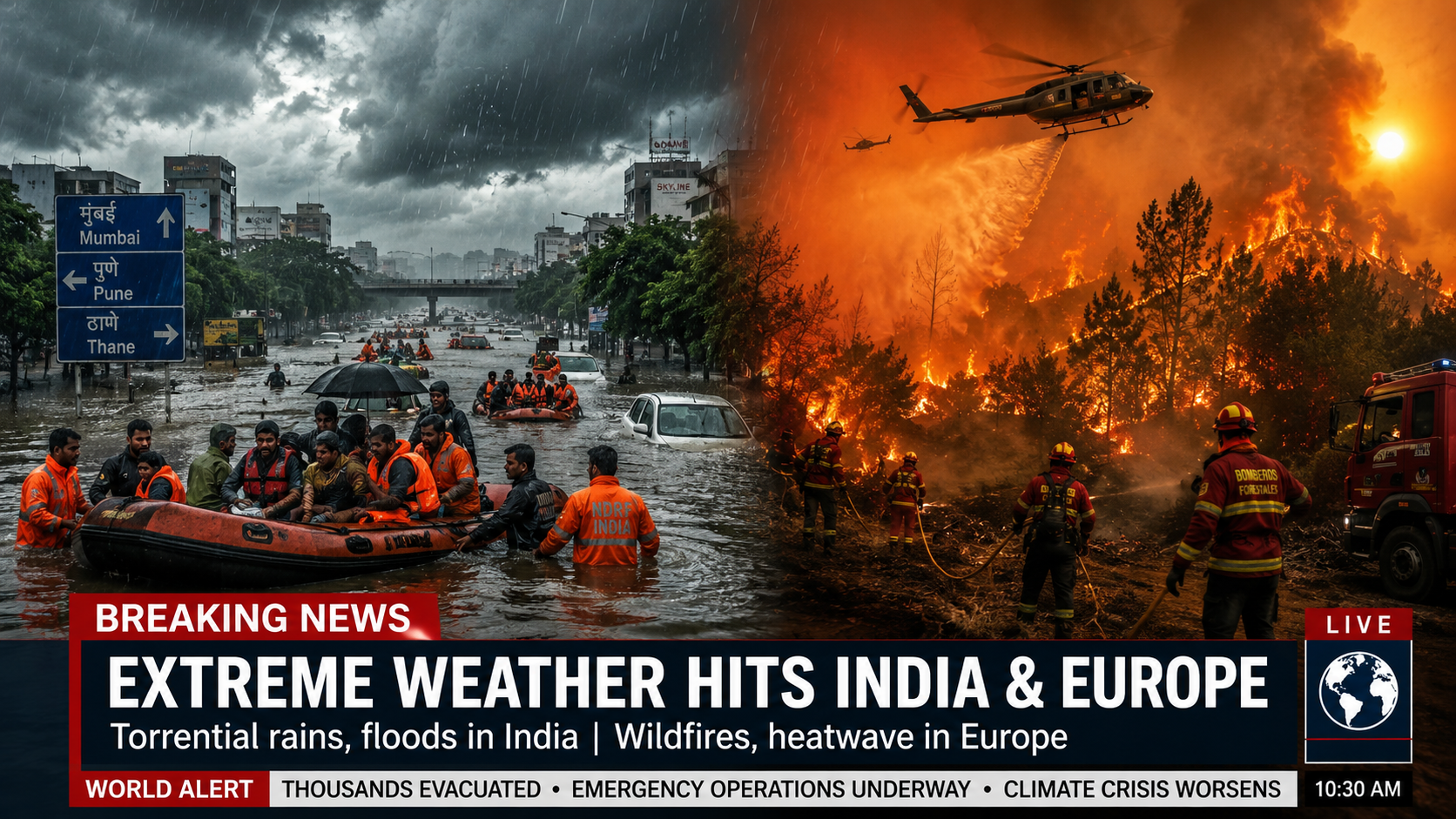 Extreme weather continues to dominate global headlines as countries across multiple continents face a combination of heavy rainfall, flooding, heatwaves, and wildfire threats. From widespread monsoon rains affecting parts of India to persistent heat and elevated wildfire risks in Europe and other regions, governments and emergency agencies are responding to increasingly complex weather-related challenges.
In India, heavy monsoon rainfall has triggered flood warnings in several states, disrupting transportation, damaging infrastructure, and affecting daily life. Meteorological agencies have issued weather alerts for regions experiencing intense rainfall, urging residents to remain cautious and follow official advisories. Emergency teams have been deployed in vulnerable areas to assist communities facing waterlogging, flash floods, and localized evacuations.
Floodwaters have impacted roads, rail services, and agricultural land in some locations, creating challenges for both residents and local authorities. Relief agencies continue to monitor conditions while providing assistance where required. Officials are also encouraging citizens to avoid unnecessary travel in areas experiencing severe weather and to stay informed through verified government updates.
At the same time, several parts of Europe continue to experience prolonged periods of high temperatures. Heatwaves have increased the likelihood of wildfires in forests and rural areas, prompting firefighting agencies to remain on high alert. Dry vegetation, low humidity, and changing wind conditions have combined to create an environment where fires can spread rapidly if ignited.
Wildfires not only threaten homes and natural ecosystems but also affect air quality and public health. Firefighters continue to work under difficult conditions to contain outbreaks while protecting nearby communities. Authorities have introduced temporary restrictions in some high-risk areas to reduce the chances of accidental fires during extreme weather.
Climate scientists note that while individual weather events have multiple contributing factors, rising global temperatures are increasing the likelihood and intensity of certain extreme weather conditions. Warmer oceans and atmosphere can contribute to heavier rainfall events, while prolonged heat and drought can elevate wildfire risk. These trends have reinforced discussions about climate resilience, sustainable infrastructure, and disaster preparedness.
Emergency management agencies worldwide are investing in improved forecasting technologies, early warning systems, and coordinated response plans. Advances in satellite monitoring, weather modeling, and communication networks are helping authorities provide faster alerts and better coordinate rescue and relief operations. Public awareness also plays an essential role, as communities that understand weather risks are often better prepared to respond safely.
The economic consequences of extreme weather can be significant. Floods may damage crops, transportation networks, and businesses, while wildfires can impact tourism, forestry, and local economies. Recovery efforts often require substantial investments in rebuilding infrastructure and supporting affected communities.
As weather agencies continue monitoring evolving conditions, international organizations emphasize the importance of cooperation, preparedness, and timely information sharing. Strengthening emergency response capabilities and investing in climate adaptation measures remain critical priorities for reducing future risks.
The ongoing combination of floods, heatwaves, and wildfire threats serves as a reminder that extreme weather can affect regions across the globe in different ways. Staying informed through official weather forecasts, following safety guidance, and supporting resilient communities are key steps in reducing the impact of these increasingly challenging events.


