

A catastrophic flash-flood disaster along the Nepal–China border has triggered a massive rescue operation, with hundreds of people dead and nearly 2,500 reported missing across Nepal and Tibet.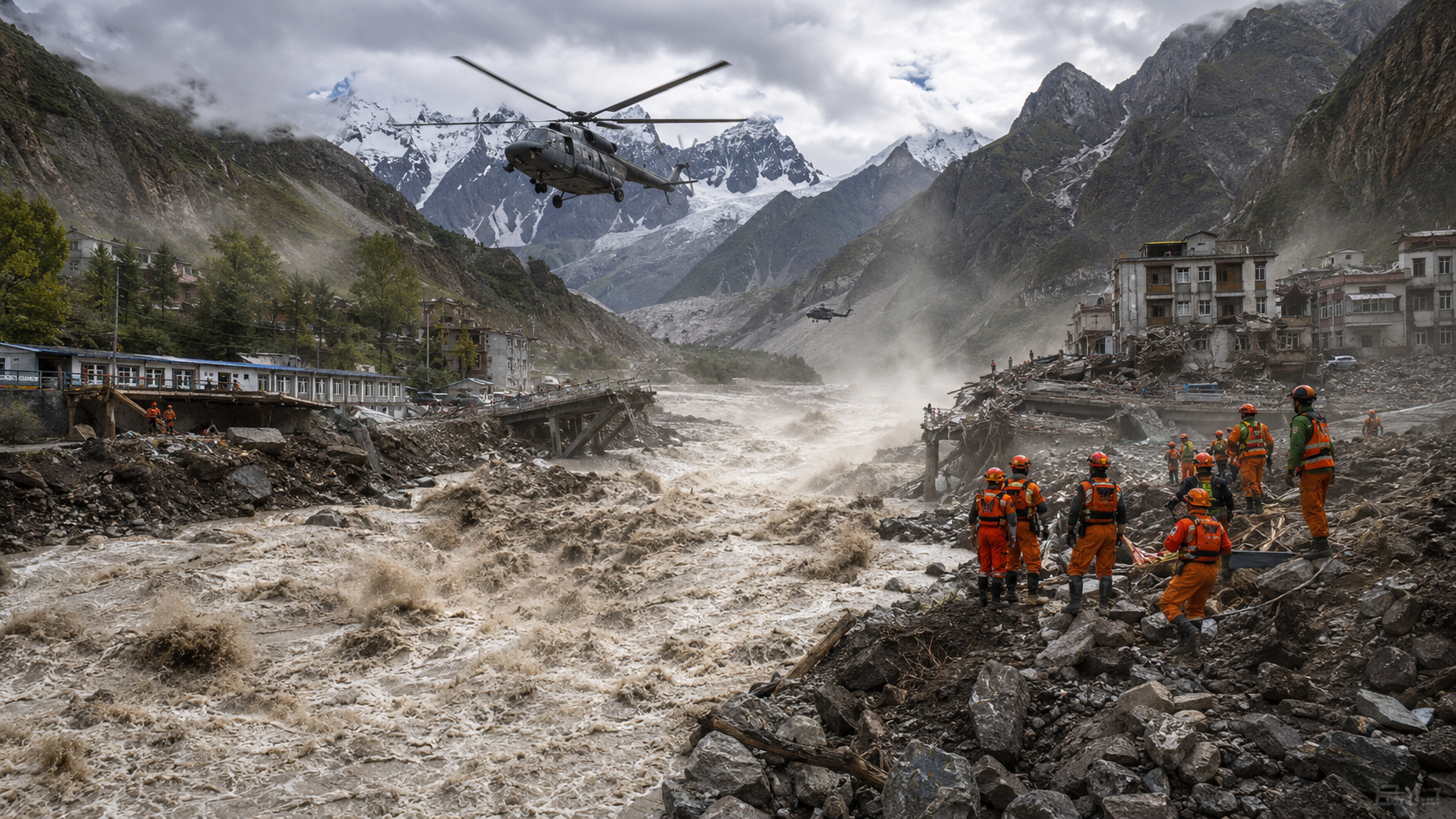 The disaster began after a collapse involving ice, rock and mountain debris sent a powerful torrent through Himalayan valleys. Rivers rapidly overflowed, destroying homes, roads, bridges and other critical infrastructure across some of the worst-hit areas.
According to the latest reports, Nepal has recorded 579 deaths, while Chinese authorities have reported seven deaths in Tibet. Across both sides of the border, nearly 2,500 people remain unaccounted for. More than 3,700 people have been rescued in Nepal, but difficult weather continues to hamper emergency operations.
Rescue Teams Race Against Time
Rescue teams are working around the clock to search for survivors buried beneath mud and debris.
Helicopter operations have become particularly important because roads and bridges have been destroyed, cutting off several communities. However, poor weather has repeatedly grounded aircraft, making access to remote areas extremely difficult.
One of the most challenging locations is the Upper Trishuli-1 Hydropower Project in Nepal’s Rasuwa district, where more than 100 people are believed to be trapped inside a mud-filled tunnel.
Rescuers are using ropes, baskets and drones to reach areas that are too dangerous or inaccessible for conventional vehicles. At the devastated Gyirong border crossing in Tibet, Chinese rescue personnel have also been working through extensive destruction.
A Disaster Across the Himalayas
Satellite imagery has helped scientists understand the extraordinary scale of the event.
Initial assessments indicate that a major collapse involving a glacier and the underlying mountain bedrock triggered a cascade of ice, rock and debris into the river system. The resulting flood dramatically altered sections of the Himalayan landscape.
The disaster has also damaged a vital route connecting Nepal with Tibet. Roads, bridges, power infrastructure and border facilities have been destroyed, creating enormous challenges for both rescue operations and future recovery.
Foreign Tourists and Pilgrims Among the Missing
The tragedy has an international dimension.
Hundreds of foreigners are believed to be among those missing, including tourists, trekkers and pilgrims visiting the Himalayan region. People from more than 30 countries have been affected.
The area is particularly significant for religious travelers because routes toward Mount Kailash attract pilgrims from across Asia and beyond.
Governments are working to determine the whereabouts of their citizens while families wait for information from authorities and rescue centers.
India Closely Watching the Crisis
The disaster is also receiving intense attention in India because Indian nationals are among those affected, particularly people traveling on pilgrimage routes toward Mount Kailash.
The international response is growing as governments and humanitarian organizations monitor the situation and offer assistance.
For the people waiting for news about missing relatives, however, the immediate priority remains the search for survivors.
The Threat Is Not Over
Rescuers are also watching for additional flooding.
The disaster created temporary water bodies and unstable areas upstream, raising concerns that further flooding, landslides or mountain collapses could occur. Authorities have been using satellite imagery and other monitoring systems to assess the evolving danger.
The International Red Cross estimates that at least 93,000 people have been affected and urgently need assistance. UNICEF has also reported that approximately 17,000 children require humanitarian support.
The Himalayan disaster is therefore becoming more than a rescue operation. It is developing into a major humanitarian crisis involving damaged infrastructure, displaced families, missing foreign nationals and continuing environmental risks.
As rescue teams push through mud, damaged roads and unpredictable weather, families across Nepal, Tibet and countries around the world are waiting for one thing: news of their missing loved ones.


