

Himalayan Disaster Leaves Communities Devastated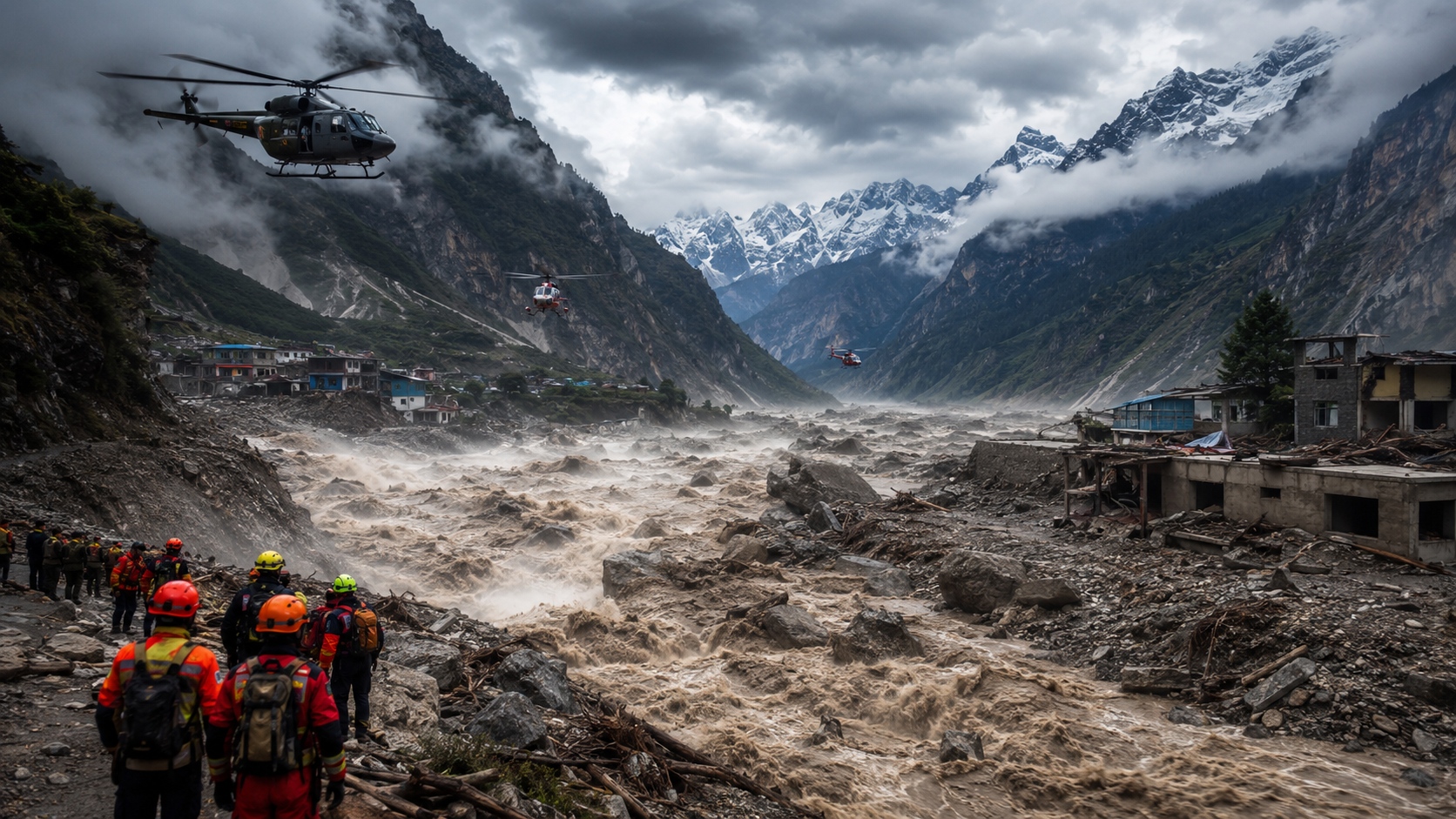 A catastrophic disaster along the Nepal–China border has left hundreds dead and more than 3,000 people missing after a glacier collapse unleashed a massive torrent of ice, rock, mud and water through Himalayan valleys.
Nepal’s disaster authorities reported 781 deaths and 2,502 people missing, while authorities in China’s Tibet region reported another 16 deaths and 546 missing. Together, the figures point to one of the region’s most severe cross-border natural disasters in recent years.
The disaster has affected more than 90,000 people, according to the Red Cross, with homes, roads, bridges, power infrastructure and other critical facilities damaged or destroyed.
Glacier Collapse Triggered Catastrophic Flooding
The disaster began when a collapse involving glacier ice and mountain material sent enormous quantities of debris into river systems along the Himalayan border.
The resulting flash flood swept through communities and transportation routes with devastating speed. Satellite imagery has since revealed the scale of the destruction, with sections of valleys transformed by mud, debris and altered river channels.
The event has also renewed attention on the increasing instability of high-altitude environments. China has linked the disaster to climate-related changes affecting the Himalayan cryosphere, while scientists continue to study the exact combination of factors behind the collapse.
Rescue Teams Race Against Time
Rescue operations involving Nepal, China and India are continuing despite difficult weather, damaged infrastructure and dangerous terrain.
Emergency teams are using helicopters, drones, heavy machinery and life-detection equipment to search areas that are difficult or impossible to reach by road. One major focus is a hydropower tunnel in Nepal, where hundreds of people may have been trapped.
The operation has been complicated by rising water levels and the possibility of further flooding. Nepal issued fresh warnings on Sunday after water levels increased in the Bhotekoshi River.
Foreign Nationals Among the Missing
The tragedy has also become an international crisis.
China says 261 foreign nationals from 23 countries are missing on the Tibetan side. Many people were visiting the Himalayan region for tourism, work or religious pilgrimages.
The Mount Kailash pilgrimage route is particularly significant because thousands of visitors from India and other countries travel through the wider region.
Governments are now working to identify missing citizens and provide information to families waiting for news.
India Involved in Rescue Efforts
India is also closely connected to the rescue effort. Indian teams have been involved alongside Nepalese and Chinese responders, while Indian authorities are monitoring reports involving citizens and pilgrims affected by the disaster.
The international dimension makes the disaster especially significant for audiences across South Asia and beyond.
The Danger Is Not Over
Although the threat from a lake formed after the glacier collapse has reportedly eased, authorities remain concerned about additional flooding.
Fresh rainfall has caused water levels to rise in some rivers, prompting warnings for vulnerable communities. Rescue operations have already been temporarily suspended at times because of weather and water-related risks.
The disaster is therefore far from over.
For rescue workers, the priority remains finding survivors. For families, the priority is receiving information about missing loved ones.
With hundreds of lives already lost and thousands still unaccounted for, the Nepal–Tibet catastrophe is emerging as one of the most devastating Himalayan disasters in recent memory.