

Total Solar Eclipse 2026: Europe Prepares for a Rare Celestial Spectacle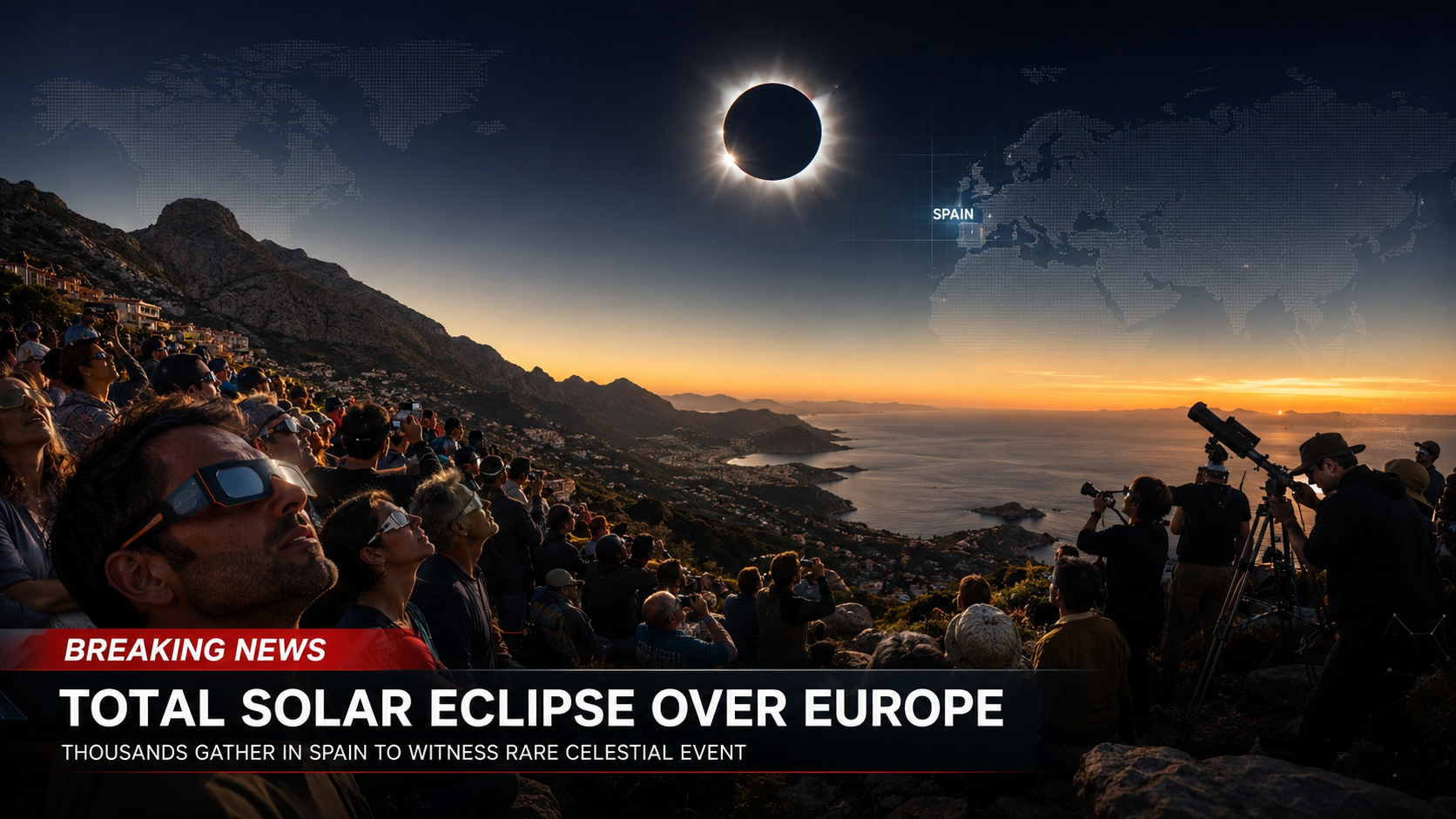 Astronomers, photographers, and travelers from around the world are preparing for one of the most anticipated astronomical events of the decade—the total solar eclipse on August 12, 2026. The eclipse is expected to attract millions of observers as the Moon passes directly between the Earth and the Sun, briefly turning day into twilight along the path of totality.
For Europe, this event is especially significant because it will be the continent’s first widely visible total solar eclipse in nearly three decades. Enthusiasts are already planning trips to locations expected to provide some of the best viewing conditions, including parts of Spain, Iceland, Greenland, and Portugal. Hotels, guided observation tours, and astronomy events have seen growing interest as the date approaches.
A total solar eclipse occurs when the Moon completely covers the Sun from the perspective of observers located within the path of totality. During the brief period of totality, the Sun’s outer atmosphere—known as the corona—becomes visible, creating one of nature’s most remarkable visual displays. Outside the path of totality, many regions will experience a partial solar eclipse, with only part of the Sun obscured.
Spain is expected to be one of the most popular destinations due to its combination of accessible viewing locations and, in many areas, historically favorable summer weather. Iceland and Greenland are also attracting attention from eclipse chasers seeking dramatic landscapes that could provide memorable photographic opportunities. Some regions of Portugal may also offer favorable viewing, depending on local weather conditions.
Astronomers emphasize that weather remains one of the biggest factors influencing eclipse observations. Even locations within the path of totality can experience cloud cover, making forecasts an important consideration for travelers. Many visitors are planning to stay for several days to improve their chances of clear skies.
The event also provides valuable opportunities for scientific research. During totality, researchers can study the Sun’s corona, test observation equipment, and collect data that are difficult to obtain under normal daylight conditions. Educational institutions and observatories are expected to organize public outreach programs to help people better understand the science behind eclipses and safe viewing practices.
Safety remains a top priority for anyone planning to watch the eclipse. Experts strongly advise using certified solar viewing glasses or specially designed solar filters whenever any part of the Sun remains visible. Looking directly at the Sun without proper eye protection can cause permanent eye damage. Optical devices such as cameras, telescopes, and binoculars also require approved solar filters when pointed toward the Sun.
Beyond its scientific significance, the eclipse is expected to provide a boost to tourism across parts of Europe. Local businesses, hotels, restaurants, and tour operators are preparing for increased visitor numbers, while many communities are planning festivals, astronomy talks, and public viewing events to celebrate the occasion.
As anticipation continues to build, the August 12 total solar eclipse stands out as one of 2026’s most remarkable natural events. Combining astronomy, travel, science, and photography, it promises to captivate millions of people around the world and create unforgettable memories for those fortunate enough to witness totality under clear skies.


