

Powerful 7.1 Magnitude Earthquake Strikes Southern Japan, Triggering Large-Scale Rescue Operations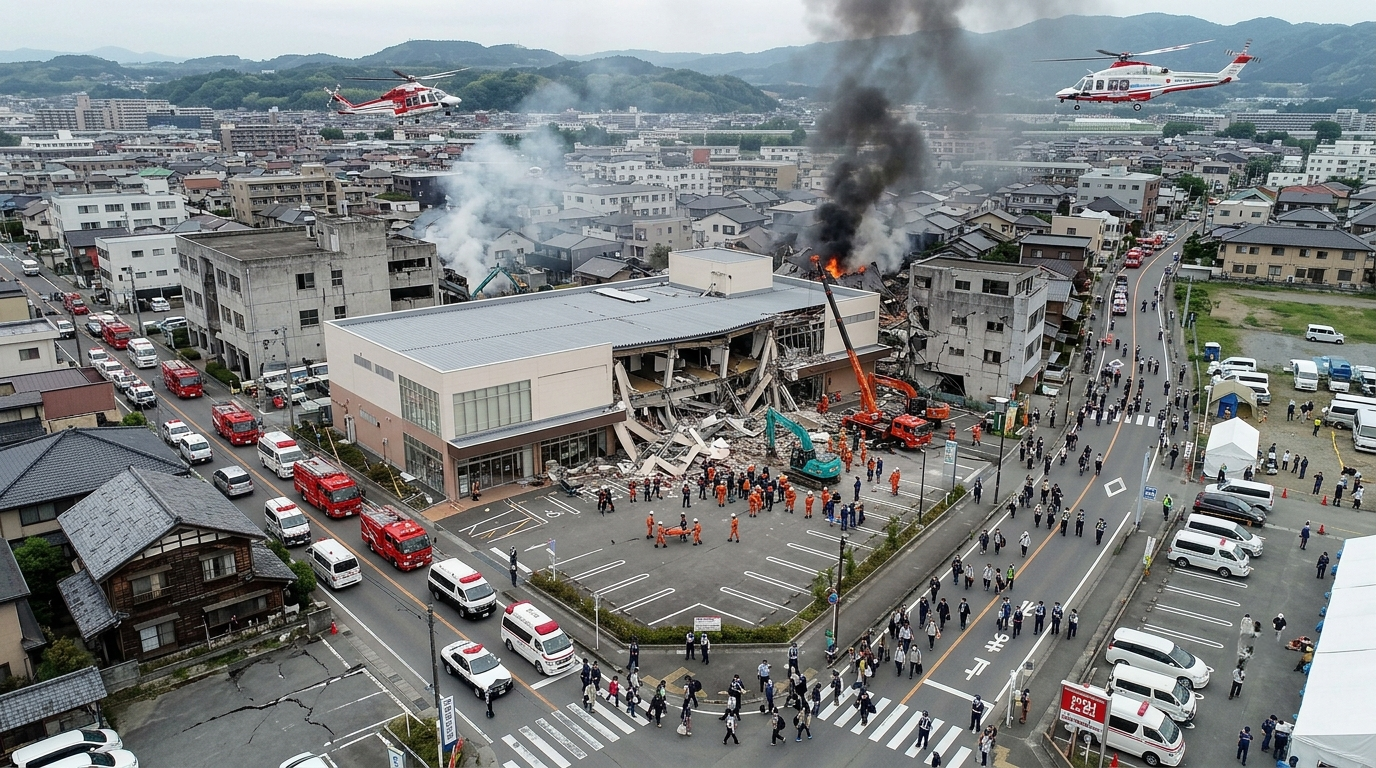 A powerful magnitude 7.1 earthquake has struck southern Japan, causing widespread concern across the region and prompting large-scale emergency response efforts. Authorities have issued evacuation instructions affecting hundreds of thousands of residents as rescue teams continue to assess damage and search for survivors in impacted areas.
The earthquake, which struck southern Japan, caused significant structural damage to several buildings, including reports of damage to a shopping mall. Emergency responders were deployed immediately following the seismic event, working tirelessly to rescue individuals trapped in affected structures and ensure the safety of nearby communities.
Japan is one of the world’s most earthquake-prone nations due to its location along the Pacific Ring of Fire, where multiple tectonic plates converge. The country’s advanced earthquake monitoring systems and disaster preparedness programs have played an important role in helping authorities respond quickly to natural disasters of this scale.
Following the earthquake, local officials instructed residents in vulnerable areas to evacuate as a precautionary measure. Emergency shelters have been established to provide temporary accommodation, food, water, and medical assistance for displaced families. Authorities continue to urge citizens to remain alert for possible aftershocks and to follow official safety guidelines.
Search and rescue operations remain a top priority as emergency personnel work around damaged infrastructure. Specialized rescue teams equipped with advanced search technology are conducting inspections of affected buildings to ensure that survivors are located as quickly and safely as possible. Emergency services are also focusing on restoring essential services and maintaining communication networks in impacted communities.
Natural disasters such as earthquakes can create significant challenges beyond the immediate physical damage. Transportation systems may experience disruptions, while businesses, schools, and public facilities often require extensive safety inspections before normal operations can resume. Authorities are continuing to evaluate the full extent of the damage as information becomes available.
The humanitarian impact of major earthquakes extends beyond the initial event. Families may face displacement for days or weeks, while recovery efforts can continue for months depending on the severity of the damage. Community resilience and coordinated emergency planning are therefore critical components of disaster response and recovery.
Japan has developed some of the world’s most sophisticated disaster management systems over several decades, emphasizing public preparedness, early warning technologies, and coordinated emergency responses. These measures have repeatedly demonstrated their importance during major seismic events by helping minimize casualties and facilitate rapid evacuations.
As rescue operations continue, international observers are closely monitoring developments across southern Japan. Governments and humanitarian organizations around the world have expressed solidarity with affected communities during this difficult time.
The magnitude 7.1 earthquake serves as another reminder of the unpredictable nature of seismic activity and the importance of disaster preparedness. While emergency responders continue their courageous efforts on the ground, the focus remains firmly on protecting lives, supporting displaced residents, and ensuring the safe recovery of affected communities throughout southern Japan.


