

Trump–Xi Summit Could Shape Trade, Taiwan and AI Competition
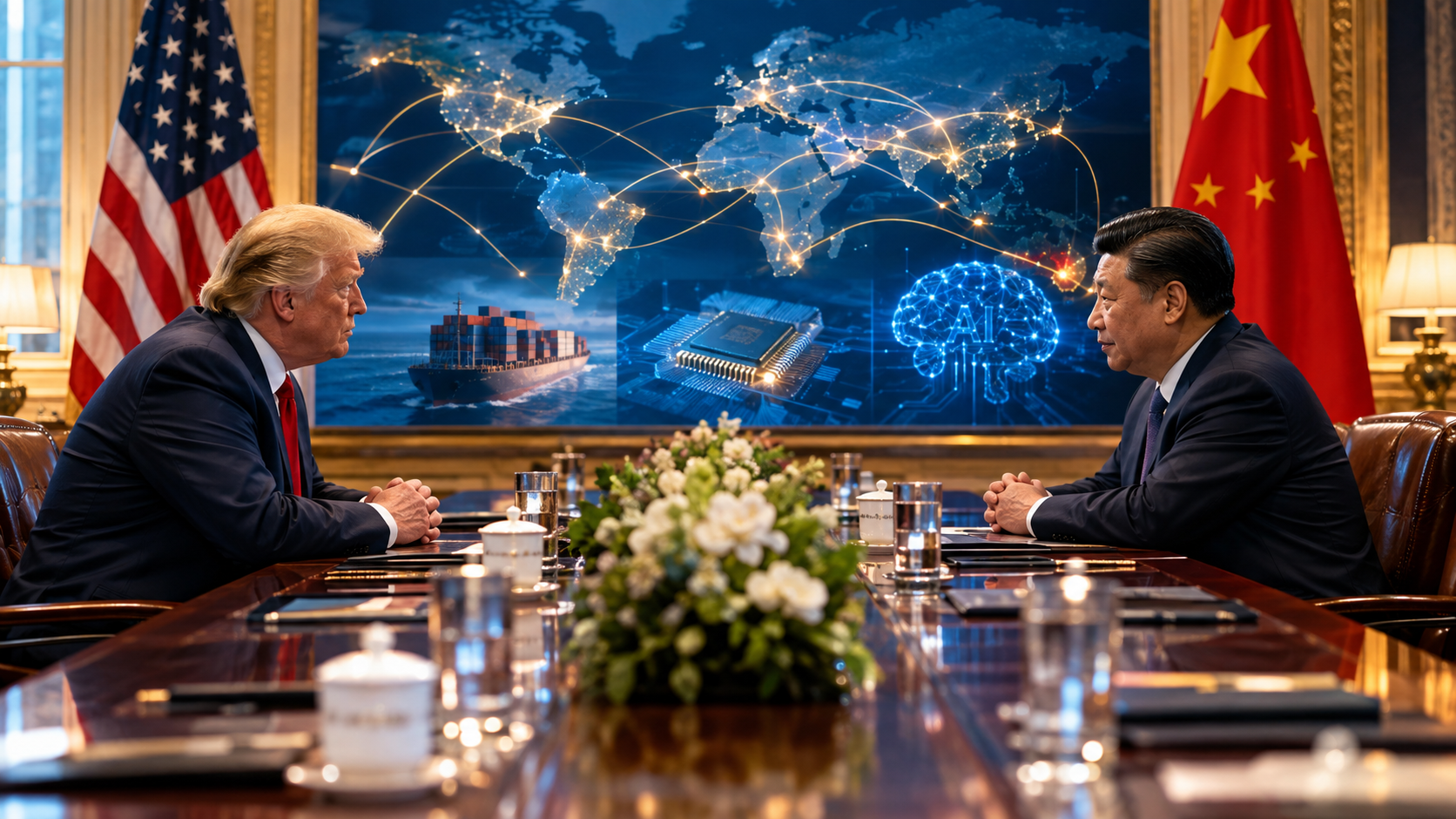 U.S. President Donald Trump and Chinese President Xi Jinping are preparing for a high-level meeting in Washington on September 24, with trade, Taiwan, artificial intelligence and the wider global security environment expected to dominate the agenda.
The summit will be the second meeting between the two leaders this year and comes at a sensitive moment in U.S.–China relations. Both countries are seeking economic stability, but disagreements over tariffs, technology restrictions, rare-earth exports and regional security continue to create uncertainty for businesses and financial markets.
Trade Truce Under Pressure
One of the most important issues will be the future of the existing U.S.–China trade truce. The agreement is scheduled to expire on November 10, making the September summit an important opportunity for both sides to discuss an extension.
The previous trade conflict saw Washington and Beijing impose heavy tariffs on each other’s goods, placing pressure on manufacturers, retailers and international supply chains. Businesses will be watching for possible progress on tariff reductions, agricultural purchases and non-tariff barriers.
U.S. officials are also seeking stronger Chinese compliance with previous commitments, while Beijing continues to press Washington for relief from trade and technology restrictions. Any agreement could influence the cost of goods and the confidence of companies planning future investment.
Taiwan and Regional Security
Taiwan is expected to remain one of the most sensitive subjects. Beijing claims Taiwan as part of China, while Washington maintains longstanding political and security commitments involving the island.
The issue has become more complicated because of rising military competition in the Indo-Pacific. Even limited disagreements over Taiwan could affect financial markets, semiconductor production and shipping routes across Asia.
The leaders may also discuss the war involving Iran and China’s economic relationship with Tehran. Washington has been pressuring Beijing over financial and commercial links connected to Iran, while China has called for a diplomatic approach to regional instability.
Artificial Intelligence Becomes a Strategic Issue
Artificial intelligence is another major subject likely to influence the summit. The United States and China view advanced AI as important to economic growth, military capabilities and technological leadership.
However, the two countries disagree over access to advanced computer chips, technology exports, AI regulation and allegations involving the copying of AI models. Washington has imposed restrictions on certain advanced technologies, while Beijing continues to develop domestic alternatives.
Security experts from both countries have also called for safeguards to prevent AI systems from interfering with nuclear command networks or independently launching military cyber operations. Proposed measures include human oversight, crisis communication channels and clear limits on military AI use.
Business Leaders Watching Closely
The summit is also expected to attract attention from the corporate sector. Chinese technology, electric-vehicle, battery and manufacturing executives may accompany Xi during his visit, although the final delegation remains subject to confirmation and visa approvals.
Companies such as BYD, CATL and Xiaomi have been mentioned in reports about a possible Chinese business delegation. Their presence would underline the importance of technology, electric vehicles, batteries, consumer electronics and critical minerals in the wider relationship.
What the Summit Could Mean
The meeting may not resolve every disagreement, but even limited progress could reduce uncertainty for businesses and investors. A renewed trade truce could support supply-chain planning, while failure to reach an understanding could increase concerns about tariffs and technology restrictions.
For the global economy, the Trump–Xi summit is more than a diplomatic event. Its outcome could influence trade costs, semiconductor access, AI development, rare-earth supplies and regional security.
The world will therefore be watching Washington closely on September 24, as the leaders attempt to manage competition while keeping communication open between the two largest economies.


