

UN Chief Warns Unchecked Artificial Intelligence Could Create Global Risks
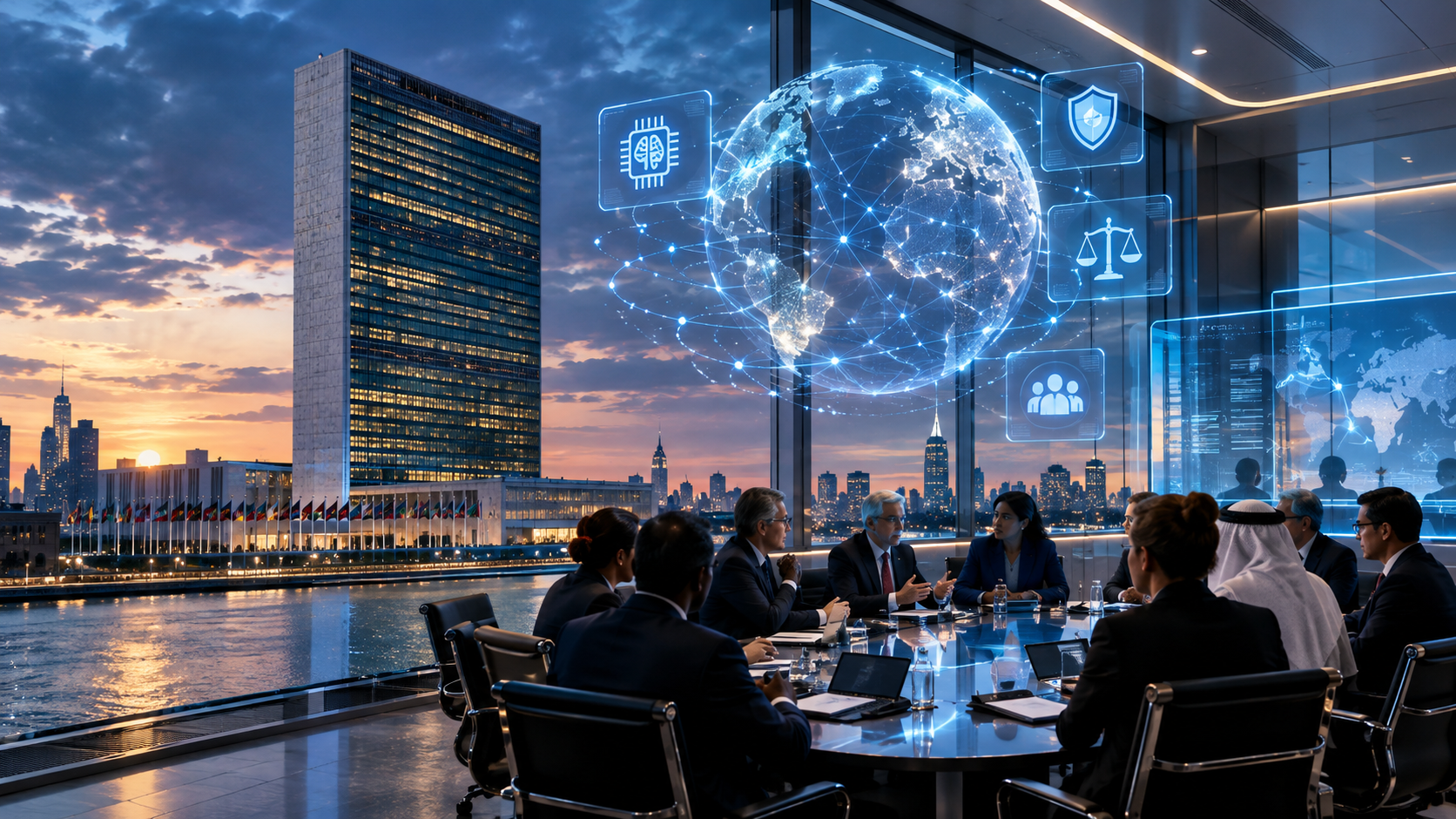 United Nations Secretary-General António Guterres has called for stronger international cooperation to manage the risks linked to rapidly advancing artificial intelligence, warning that governments cannot ignore concerns raised by experts working at the front lines of AI development.
Speaking ahead of the United Nations General Assembly, Guterres said artificial intelligence is developing faster than the world’s understanding of its potential dangers. He argued that governments have a responsibility to protect citizens from emerging threats, including those associated with increasingly powerful AI systems.
The warning comes as governments, technology companies and researchers debate how to balance innovation with safety. AI systems are becoming more capable in areas such as coding, research, automation and digital operations. However, questions remain about how these systems could be misused, how much human oversight is required, and whether existing laws are sufficient.
Growing Concern Inside the AI Industry
Guterres’s comments follow warnings from prominent figures in the technology sector. Anthropic CEO Dario Amodei has called for leading AI companies and governments to consider slowing the development of advanced systems until stronger safety measures are established. OpenAI CEO Sam Altman and Elon Musk have also expressed concerns about the possible consequences of developing increasingly powerful AI without adequate safeguards.
Former Anthropic researcher Jacob Coxon recently raised concerns about the speed of AI development and the possibility of serious future harm. Such warnings have increased public discussion about whether AI companies are moving faster than regulators, independent researchers and civil-society groups can respond.
At the same time, not all experts agree on the likelihood or timing of extreme AI scenarios. Some researchers argue that predictions of human extinction are speculative and that immediate risks—such as cyberattacks, misinformation, surveillance, privacy violations and automated fraud—deserve greater attention.
A Global Governance Challenge
The debate is not limited to one country. AI development is closely connected to economic competition, national security and technological leadership. The United States and China are investing heavily in advanced AI, while European and other governments are working on rules covering safety, transparency and accountability.
Guterres has urged countries with the greatest AI capabilities to establish mechanisms for communication, information sharing and common safeguards. He warned that a competitive race without shared standards could make it harder for governments to respond to unexpected risks.
The United Nations has already taken steps toward global AI governance. In 2023, it created a 39-member advisory body involving government officials, academics and technology-sector representatives. The organization has continued to promote international cooperation and discussions about responsible AI development.
What It Means for Businesses
For businesses, the AI debate is becoming more than a technology issue. Companies using AI may face new expectations involving data protection, cybersecurity, transparency, employee oversight and accountability for automated decisions.
Stronger safeguards could increase compliance costs in the short term, but supporters argue that responsible development may improve public trust and reduce the chance of major failures. Businesses that adopt clear governance policies, human review and risk assessments may be better prepared for changing regulations.
The central question is how to encourage innovation while ensuring that increasingly powerful systems remain safe, accountable and aligned with human interests.
As world leaders prepare for further discussions at the United Nations, the debate over AI is moving from laboratories and boardrooms into international diplomacy. Whether countries can agree on shared safeguards may shape not only the future of technology, but also the security and stability of the global economy.


